
A deck can look dry enough to stain while still holding old coating, uneven weathering, or moisture that changes how the wood accepts finish. Our deck stain services in Commerce Township, MI begin with what the boards can actually absorb.
We’ll call back within one business day.
Deck stain interacts with the wood beneath it, so the condition of the fibers matters. Bare boards, faded stain, replacement lumber, weathered areas, and sections that still hold a heavier previous finish may all absorb color differently. That is why an even-looking result starts before the new stain is opened.
The previous finish is equally important. A deck that was stained years ago presents a different starting point from one that is painted, partially stripped, or newly resurfaced. Old coating can influence color, penetration, and preparation, especially when some boards are more exposed than others.
Four Seasons Painting & Drywall LLC approaches deck stain services in Commerce Township, MI with preliminary assessment and preparation options that can include resurfacing, sanding, paint removal, cleaning, and priming where appropriate. The company also offers natural, dark, and two-tone stain directions rather than limiting every deck to one finish concept.
Before choosing a stain color, it helps to identify what is already on the deck. Bare wood can absorb differently from previously stained boards, and intact paint can prevent a penetrating stain from behaving like it would on exposed lumber. The starting surface should shape the staining plan.
Uncoated boards show the wood grain directly, but age, weathering, replacement lumber, and moisture can still create uneven absorption. The wood needs to be ready to accept the selected stain rather than simply look unfinished.
Older stains may be faded in exposed areas while remaining darker under furniture, railings, or shade. Those differences should be evaluated before another treatment is applied across the full deck.
Stain should not be treated as another coating placed directly over sound paint. Four Seasons includes paint removal among its documented deck-staining preparation options when the desired finish requires exposed wood.
A deck does not have to use one finish everywhere. Stained walking boards can be paired with painted railings, and natural or darker stain tones can be coordinated when the wood and existing finishes support that approach.
Stain reveals more about the wood than an opaque painted finish. Differences in porosity, old coating, weathered fibers, and board age can remain visible after staining because the finish interacts with the surface instead of simply hiding everything beneath one solid color.
That variation is not always a defect. Some homeowners want natural differences in wood grain to remain visible. The problem is when preparation or previous coatings cause unpredictable blotches, sections that resist stain, or replacement boards that take color very differently from older decking.
Older boards and newly replaced lumber may not accept stains at the same rate. Differences in grain density, weathering, sanding, and previous finish can produce lighter and darker areas.
Remaining paint, heavy old stain, or other coating can prevent the new treatment from interacting evenly with the wood underneath.
Long-term sun and moisture exposure can leave gray, rough, or raised wood fibers at the surface. Staining over unstable fibers does not automatically create a uniform appearance.
Boards that still hold moisture after rain, washing, or extended shade may not be ready for another stain treatment. Drying conditions should be considered before the finish is applied.
Deck staining is partly a preparation decision and partly an appearance decision. Four Seasons Painting & Drywall LLC offers natural stains, darker stain treatments, two-tone combinations, painted railings, and mixed staining-and-painting options, allowing the finish direction to respond to both the wood and the desired look.
Previous stain, paint, bare areas, and resurfaced sections all affect what can be done next. The existing finish needs to be understood before deciding how much grain or color variation should remain visible.
A natural stain can keep more of the wood’s original character in view, while a darker treatment creates a stronger color shift. Two-tone combinations offer another way to separate deck components visually.
Railings do not have to follow the same finish as walking boards. Painted railings can be coordinated with stained decking when the homeowner wants sharper contrast without turning the entire deck into an opaque painted surface.
When the goal changes from stained wood to a fully opaque finish, deck board repainting should be considered separately. If the deck is one part of a larger exterior update, paintwork for building exteriors can coordinate nearby siding, trim, doors, and other surfaces.
Four Seasons’ existing deck-staining process includes assessment, resurfacing, sanding, paint removal, cleaning or priming where needed, application of the selected treatment, and final inspection. The exact combination depends on what the deck already has on it and what finish is planned next.
Where the wood condition makes that cleaning method appropriate, outdoor surface pressure cleaning can be considered separately rather than treated as an automatic step for every deck.

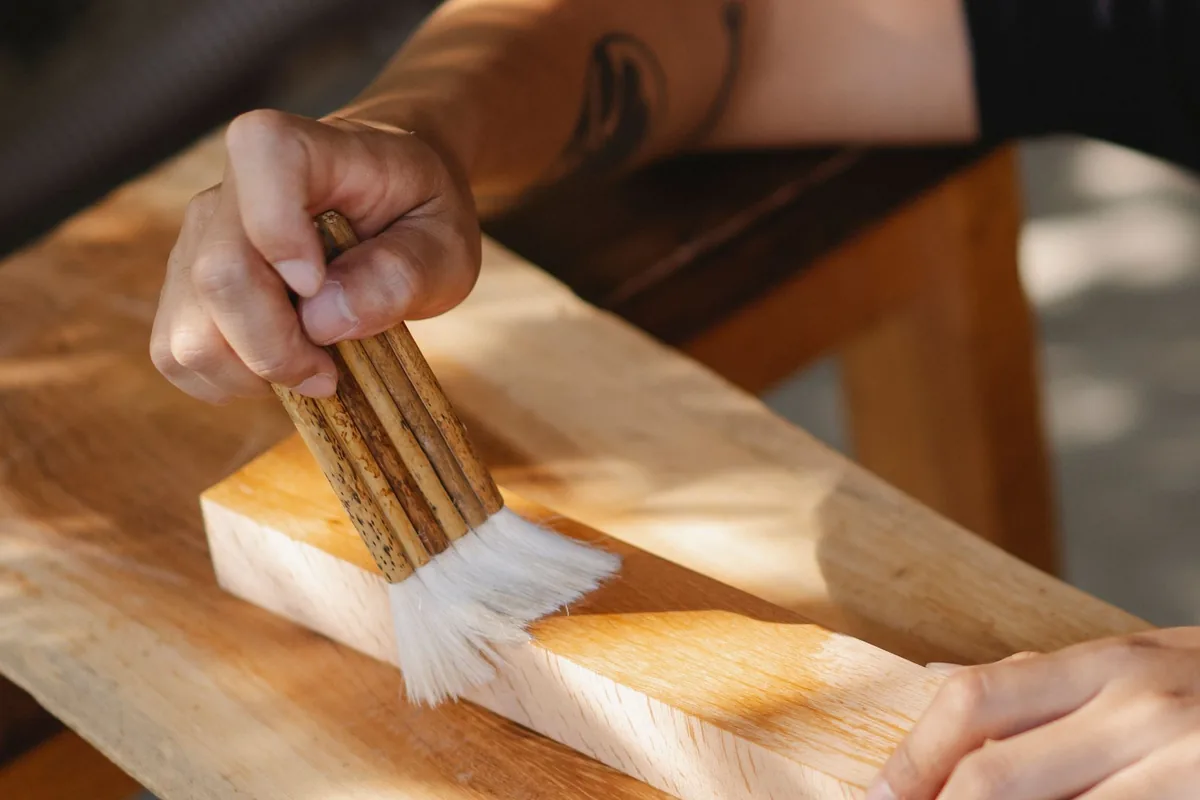
Deck stain services in Commerce Township, MI can lead to very different finished looks depending on the wood and what is already on it. The best starting point is how much grain you want to see and whether the existing coating allows that appearance without extensive removal first. Nearby fences can be coordinated visually without assuming the same preparation or stain system; outdoor fence surface refinishing keeps those vertical wood surfaces separate.
Keep more of the original wood character visible when the prepared boards and selected stain support that appearance.
Shift the deck toward a deeper color while retaining a stained rather than conventionally painted finish.
Use coordinated stain colors or finish combinations to give separate deck elements more visual definition.
Combine stained deck boards with painted railings when the two surfaces are better served by different finish directions.
When old coating, uneven weathering, or damaged surface fibers interfere with the desired stain, resurfacing and preparation should become the priority before color selection.
The most useful estimate starts with the deck’s finish history. Showing where old stain remains, where wood has been replaced, and how much natural grain you want to preserve makes it easier to determine whether the deck needs a straightforward restain or more extensive preparation first.
Yes, but the existing stain needs to be evaluated first. Faded areas, remaining color, coating compatibility, and the desired new appearance all affect preparation. A simple maintenance coat may be possible in some situations, while heavier old finish or a major color change can require more surface work.
Not every deck requires complete stain removal. The answer depends on how much previous finish remains, whether it is compatible with the new treatment, and how much wood exposure the desired appearance requires. Peeling, heavy buildup, uneven color, or a major finish change can make resurfacing or removal more important.
It can be possible, but intact paint prevents stain from interacting with the wood beneath it. Moving from paint to stain can therefore require paint removal, sanding, or resurfacing before enough suitable wood is exposed. Four Seasons specifically includes paint removal among its deck-staining preparation options.
Different boards can absorb stain differently because of age, grain, previous coating, weather exposure, sanding, and whether individual boards were replaced. A stain may therefore reveal natural variation that opaque paint would hide. Preparation helps manage those differences, but it does not make every piece of wood identical.
Yes. Four Seasons Painting & Drywall LLC offers combinations that include stained deck surfaces with painted railings. This can preserve more wood character on the walking surface while giving railings a stronger solid-color contrast, provided each surface is prepared for the finish being applied.
Questions about colors, timing, or cost? Call us.
We provide interior painting throughout Commerce Township, Highland, Novi, Brighton, Clarkston, and the rest of Southeastern Michigan.
Faded stain, old paint, weathered boards, and replacement lumber can accept a new finish differently. Four Seasons Painting & Drywall LLC can determine what needs to stay, what should come off, and which stain direction fits the deck afterward.