
- Four Seasons Painting & Drywall LLC
Commercial vs Residential Painting: What's Different?
If you’ve ever gotten quotes for painting an office building and a house in the same week, you may have noticed the numbers, timelines, and conversations look nothing alike. That’s because commercial and residential painting are, in many ways, two separate trades that happen to use the same brushes and rollers.
At Four Seasons Painting & Drywall LLC, we work on both sides of this divide throughout the Metro Detroit area, from single-family homes in established neighborhoods to retail strips and office buildings along busy commercial corridors. Understanding the real differences between the two can help you set realistic expectations, choose the right contractor, and avoid surprises once the project starts.
What Makes Commercial and Residential Painting Different?
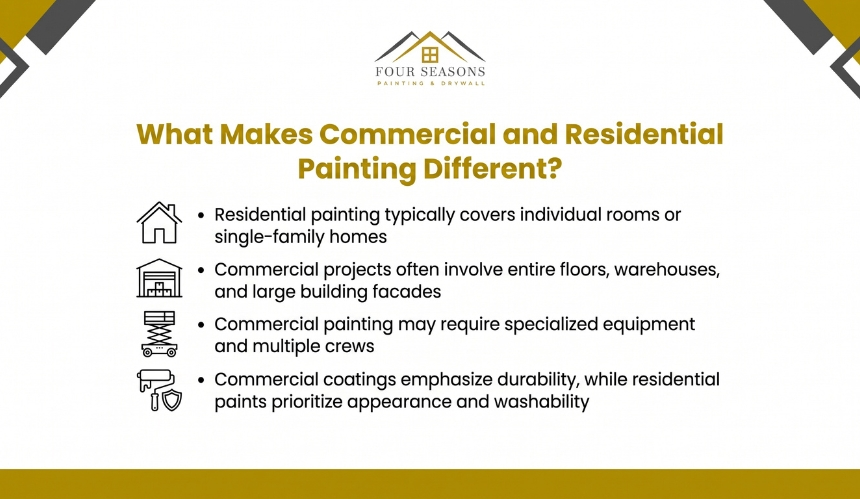
At a glance, painting is painting — surfaces get prepped, primed, and coated. But the way a project is planned, priced, and executed changes dramatically depending on whether it’s a home or a business. The differences come down to four main factors: scale, materials, scheduling, and the standards each type of project needs to meet.
Scope and Scale of the Project
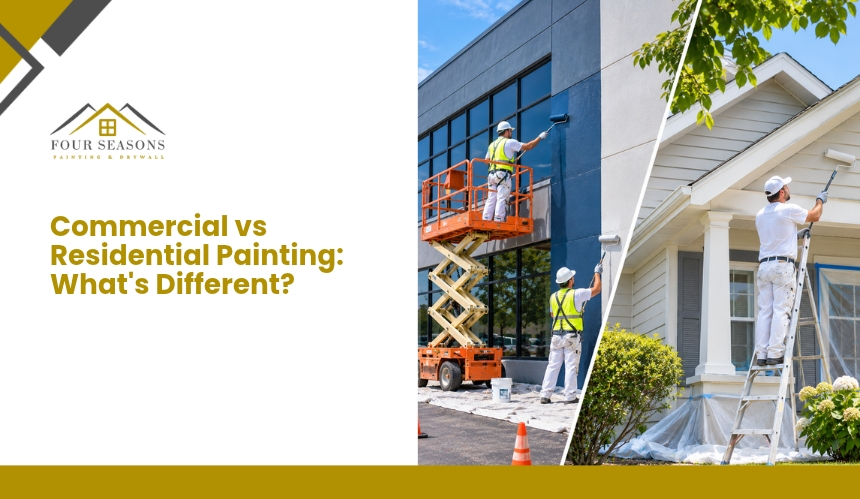
Residential painting projects are usually measured in rooms or square footage of a single home — a living room, a full interior repaint, or exterior siding and trim. Commercial projects are often measured in much larger units: entire floors, warehouse interiors, multi-unit apartment complexes, or long retail facades. A commercial job might involve scissor lifts, scaffolding, and multiple crews working simultaneously to meet a tight deadline, while a residential job typically involves one or two painters moving methodically through a house.
Materials and Paint Products Used
Commercial spaces generally require higher-durability, industrial-grade coatings designed to withstand heavy foot traffic, frequent cleaning, and sometimes chemical exposure; think epoxy floor coatings in a warehouse or scuff-resistant paint in a medical office hallway. Residential projects prioritize appearance, washability, and low-VOC formulas that are comfortable for a family to live around, since homeowners are often present during and immediately after the work.
Commercial Painting: Unique Challenges and Requirements
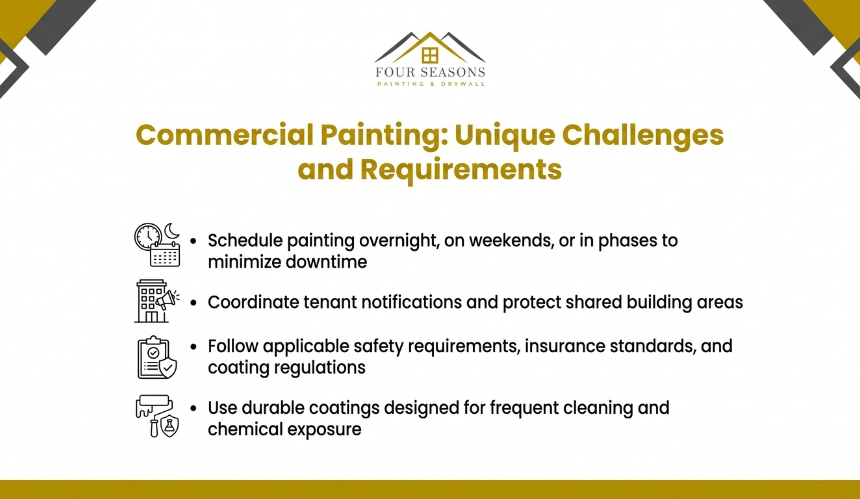
Commercial painting is as much about logistics as it is about paint quality. Business owners can’t afford extended downtime, so contractors have to plan around operations, not the other way around.
Working Around Business Hours and Tenants
Many commercial projects happen overnight, on weekends, or in phased sections so a store, restaurant, or office can stay open. We’ve coordinated after-hours work for retail and office spaces along busy stretches like Woodward Avenue, where daytime traffic and customer flow make it impractical to paint during business hours. Multi-tenant buildings add another layer of complexity, since contractors often need to notify tenants, protect common areas, and keep noise and fumes to a minimum.
Compliance, Safety, and Durability Standards
Commercial jobs frequently involve OSHA safety requirements, insurance documentation, and sometimes fire-rating or code compliance for specific coatings. Because commercial surfaces endure more wear, think hallways in an apartment complex or a restaurant kitchen, contractors typically specify coatings rated for scrubbability and chemical resistance, and the painting schedule is built around minimizing liability and keeping the space safe for employees and customers throughout the process.
Residential Painting: What Homeowners Should Expect

Residential painting is a more personal process. Homeowners are usually involved in every decision, from sheen level to the exact shade of white for the trim, and the work happens in spaces people actually live in day to day.
Color Consultation and Personal Style
Unlike commercial projects, which often follow a corporate brand palette or property management standard, residential clients usually want guidance. A good contractor will walk through color psychology, how natural light affects a shade throughout the day, and which finishes make sense for high-traffic rooms like kitchens and hallways versus bedrooms.
Protecting Your Home and Landscaping
Residential crews need to work carefully around furniture, flooring, pets, and children, plus landscaping outside. In neighborhoods with mature trees and established gardens, common in areas like Royal Oak, Birmingham, and Grosse Pointe, exterior painters take extra care protecting flower beds, walkways, and irrigation systems while setting up ladders and drop cloths. Homes built in the early-to-mid 1900s, which are common in these communities, may also require lead-safe work practices during prep and sanding, which is a consideration commercial crews rarely encounter in newer office or retail buildings.
How Climate and Local Conditions Affect Both Types of Projects

Southeast Michigan’s climate plays a real role in both commercial and residential painting decisions. The freeze-thaw cycle that hits Metro Detroit every winter causes expansion and contraction in siding, brick, and stucco, which can crack old paint films and create adhesion problems if prep work is rushed. Humidity swings off the Great Lakes also affect how long paint needs to cure before a second coat or before furniture goes back against a wall. For exterior projects, we generally recommend painting between late spring and early fall, when temperatures are consistently above 50 degrees, and humidity is more predictable — this applies whether we’re coating a single-family home’s siding or a commercial building’s exterior stucco.
Which Type of Painting Contractor Should You Hire?
Not every painting company handles both commercial and residential work well, and that’s worth asking about directly. A contractor experienced mainly in home painting may not have the crew size, equipment, or insurance coverage needed for a large commercial job. Conversely, a strictly commercial crew may not have the patience or finish-level expertise homeowners expect for detailed trim work or cabinet painting. When vetting a contractor, ask about their experience with projects similar in size and type to yours, their timeline flexibility, and whether they carry the liability coverage appropriate for commercial properties if that’s what you need.
Whether you’re a homeowner planning an interior refresh or a business owner managing a larger commercial property, Four Seasons Painting & Drywall LLC provides a full range of painting and drywall services throughout the Metro Detroit area, with crews experienced in both residential and commercial work. Contact us today for a free estimate.
Frequently Asked Questions
How much more does commercial painting cost compared to residential painting?
Commercial painting often costs more per square foot than residential work because of specialized coatings, lift or scaffolding rental, and after-hours labor rates. However, large commercial jobs can sometimes have a lower overall cost per square foot than a small residential project due to economies of scale on a bigger surface area.
Can the same paint be used for both commercial and residential buildings?
Technically yes, but it’s not usually recommended. Commercial spaces benefit from higher-grade coatings built for durability and frequent cleaning, while residential paints are formulated more for appearance, low odor, and comfort in living spaces. Using the wrong type can lead to premature wear or an unnecessarily high cost.
How long does commercial painting take compared to residential painting?
It depends entirely on square footage and complexity, but commercial projects often take longer in calendar days even though they move faster per square foot, since the work is frequently split into overnight or weekend shifts to avoid disrupting business operations. A typical home repaint might take 3-7 days, while a commercial building could take several weeks when phased properly.
Do commercial painting contractors need special licensing or insurance?
Many commercial properties and property management companies require contractors to carry specific levels of general liability insurance and workers’ compensation coverage, and some jobs require OSHA-compliant safety practices. Always confirm a contractor’s insurance and licensing before signing a commercial contract.
What's the best time of year to paint a home or business exterior in Michigan?
Late spring through early fall is generally ideal, when daytime temperatures stay reliably above 50 degrees Fahrenheit and humidity is lower. Painting too early in spring or late into fall risks poor paint adhesion and longer cure times due to Michigan’s unpredictable temperature swings.
Should I repaint before selling a home or leasing a commercial space?
Yes, in most cases. A fresh, neutral paint job is one of the most cost-effective ways to improve first impressions for homebuyers or commercial tenants, and it can help a property sell or lease faster by making spaces look well-maintained and move-in ready.