
Not every damaged trim board, casing, or molding section needs full replacement. Carpentry services in Commerce Township, MI preserve sound material, replace failed sections, and restore damaged woodwork without rebuilding more than necessary.
We’ll call back within one business day.
Wood rarely deteriorates evenly. A molding run can remain solid while one corner separates. Door casing may move because its attachment failed even though the board itself is still usable. An exterior section can lose material at one edge while the surrounding wood continues to hold its shape and fasteners.
That difference matters because repair should follow the condition of the material. Surface dents, open joints, split edges, loosened fasteners, missing sections, and softened wood do not call for the same response. Good carpentry separates cosmetic defects from failures that affect how the piece connects, carries load, or remains attached.
Finish work adds another requirement: the repair has to fit what stays. Width, thickness, molding profile, edge shape, joint position, and alignment all influence whether a new or repaired section disappears into the surrounding woodwork or looks like an obvious patch.
Damage leaves clues. A crack shows where fibers are separated, movement reveals a weak connection, softness points to material loss, and a broken edge shows where the original profile no longer exists. Reading those clues helps determine whether the piece should be repaired, refastened, reinforced, or replaced. Carpentry services in Commerce Township, MI are most useful when the repair begins with the condition of the wood rather than an assumption that every damaged piece needs complete replacement.
Cracks along trim, molding, boards, or other wood components need to be checked for depth, movement, fastening, and whether enough stable material remains to support a lasting repair.
Open joints, moving casing, loose trim, and separated woodwork often point to failed attachment or movement rather than complete material failure across the entire piece.
Softened wood, crumbling edges, or decay near exposed areas indicates material loss that should not be treated like a simple surface defect hidden beneath filler or paint.
Broken corners, missing sections, damaged molding runs, and failed boards require replacement material that matches the dimensions, alignment, and profile of the surrounding woodwork.
A repair can look acceptable from several feet away and still fail at the connection underneath. Corners reopen when joints remain unstable. Trim moves when the attachment point no longer holds. Replacement pieces stand out when their profile or thickness differs from the wood beside them.
Hidden deterioration creates another problem. Damage visible on the face of a board does not always show how far material loss extends along an edge, behind trim, or around a fastening point. The repair boundary needs to reach stable wood before rebuilding begins. When wood damage is only one part of a larger renovation, room and layout updates provide the broader project path. Repairs around retained kitchen trim, cabinetry details, or adjoining woodwork can also accompany kitchen layout transformations when the room itself is changing.
Mitered corners, butt joints, returns, and other connections open when movement or weakened fastening pulls adjoining pieces apart. Repairing only the visible seam leaves the failed connection underneath unchanged.
Trim and boards can move even when the material remains usable. Loose fasteners, damaged backing, or weakened attachment points need correction before the wood is expected to stay aligned.
Replacement wood looks wrong when its width, thickness, edge shape, or molding profile differs from the original run. Even small dimensional changes become obvious across repeated trim lines.
Surface damage sometimes continues farther into the piece than the visible defect suggests. Soft edges, concealed decay, and material loss around fasteners change where sound wood actually begins.
Preserving existing wood makes sense when the remaining material is stable enough to hold its shape, connection, and finish. Replacement becomes the better path once deterioration reaches the point where a repair would depend on weak wood to stay together.
Wood worth keeping needs enough sound material to accept fastening, maintain its profile, and support the joint or finish around it without continuing to break apart.
Visible trim and molding repairs need dimensions and shapes that align with adjoining pieces so the new section continues the original line instead of interrupting it.
A useful repair ends where stable material begins. Removing too little leaves weakness behind, while replacing an entire run can discard wood that still performs properly.
Where repaired exterior wood meets painted siding, trim, or other exposed surfaces, weather-facing surface refinishing can handle the coating work after the carpentry is stable. If the adjoining material is cracked stucco rather than wood, stucco surface restoration addresses that separate substrate.
The repair starts at the defect but should not stop there. Cracks, looseness, missing material, failed joints, and soft edges are followed until stable wood and dependable attachment points are found.
For carpentry services in Commerce Township, MI, the finished repair should leave the retained wood stable, aligned, and ready for the next finish rather than simply hiding the original defect. Because Four Seasons Painting & Drywall LLC also handles remodeling and painting, the wood repair can be completed with the adjoining room or exterior finish in mind.
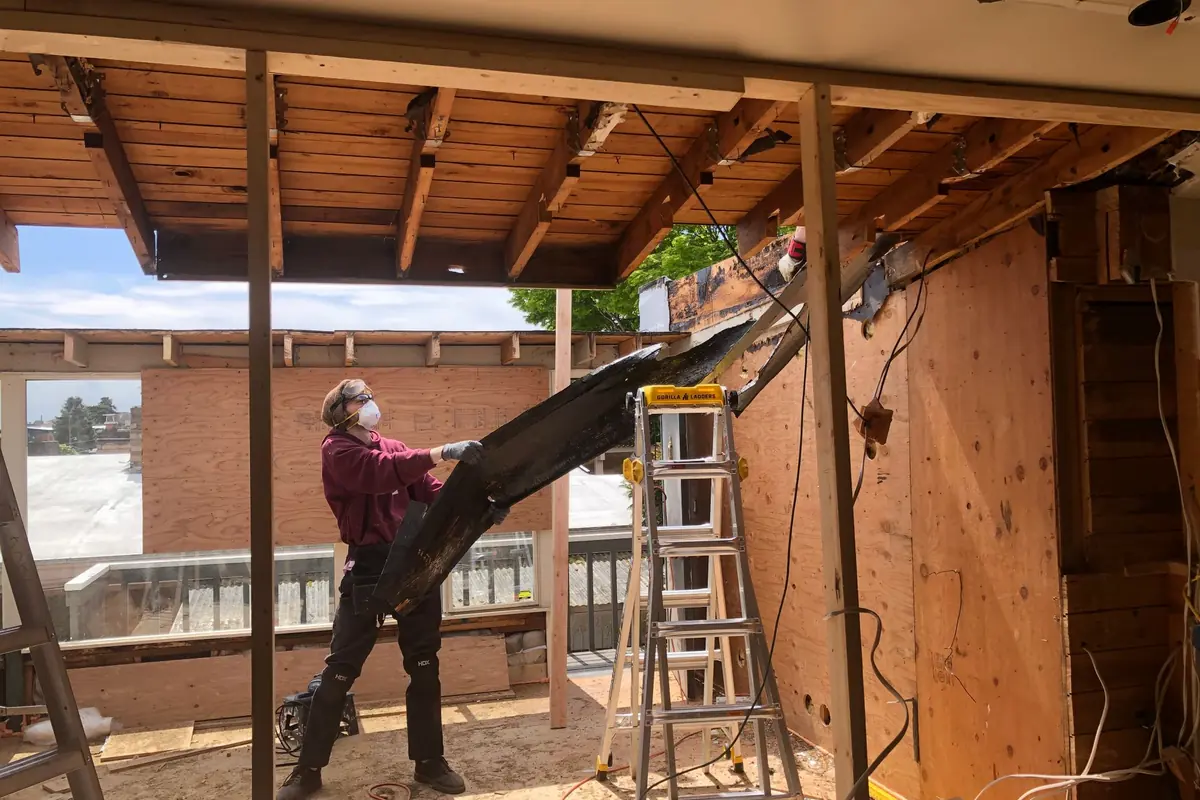
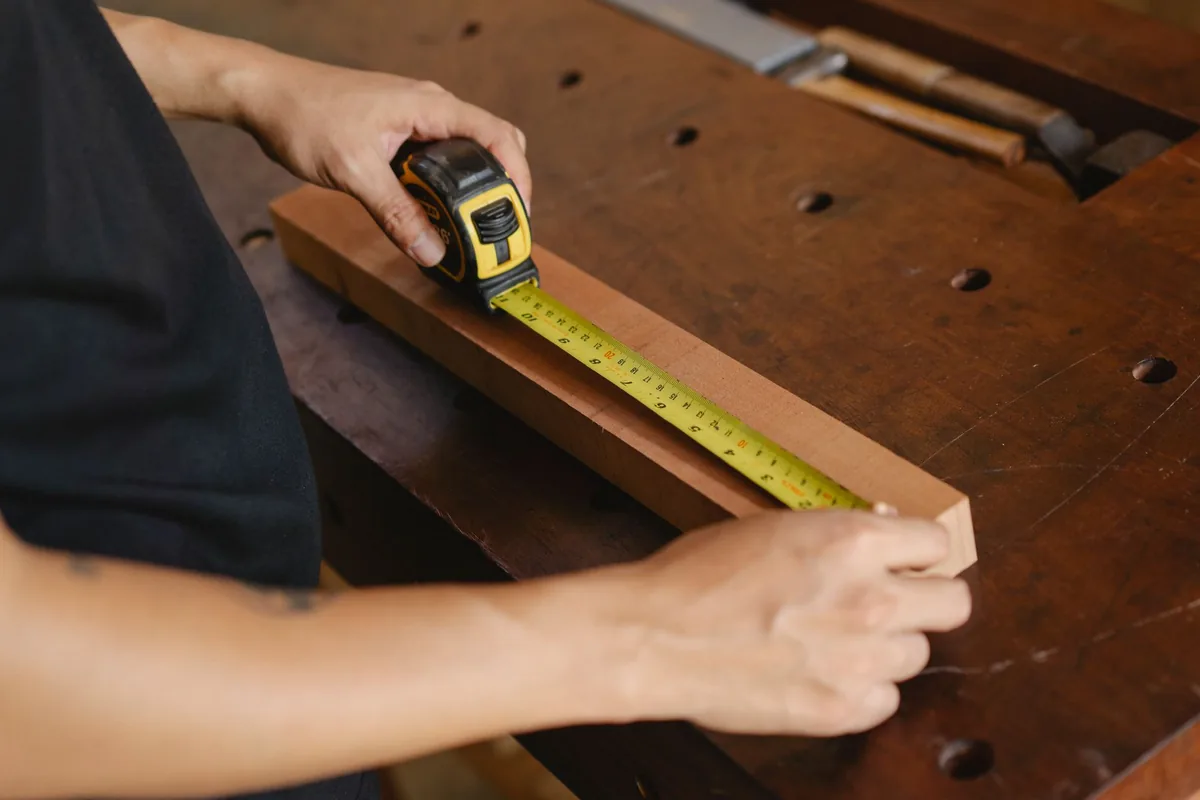
Not every damaged piece deserves the same treatment. The condition of the material, the failure point, and the amount of sound wood remaining determine how much intervention is actually useful.
Small dents, splits, and damaged edges can often be corrected while the main wood section remains in place.
Separated corners, returns, and connections may be rebuilt when the adjoining pieces are still sound and reusable.
Loose trim or boards do not always need replacement when the material is intact and only the attachment has failed.
A damaged section can be removed and replaced without disturbing the entire surrounding run when deterioration is localized.
Severely deteriorated, broken, or unstable wood is replaced when the remaining material no longer supports a reliable repair.
Wood problems often reveal themselves through movement, softness, open seams, and changing edges before the entire piece looks visibly failed. A closer inspection helps distinguish a surface blemish from material or attachment damage.
Start with the amount of sound material remaining. Wood that still holds its shape, accepts fastening, and has localized damage may be repairable. Replacement becomes more appropriate when deterioration, breakage, or material loss leaves too little stable wood to support the connection or finish.
Often, yes. Partial replacement works when the repair can stop at sound material, and the new section can match the existing width, thickness, profile, and alignment. The joint between old and new wood also needs to fall where it can be rebuilt cleanly.
Corner gaps can result from movement, weakened fastening, joint failure, dimensional changes in the wood, or earlier installation issues. Filling the visible gap alone does not correct a connection that continues moving, so the joint itself should be evaluated before refinishing.
Matching depends on the original profile, dimensions, condition, and availability of suitable replacement material. Common profiles are generally easier to reproduce, while older or unusual molding may require closer fitting so the replacement aligns with the surrounding run.
Yes. Paint should go over stable wood, not material that is soft, loose, broken, or unable to hold its shape. Carpentry repairs or replacement should address the failed substrate first; then exterior preparation and coating can protect the repaired area and surrounding surfaces.
Questions about colors, timing, or cost? Call us.
We provide interior painting throughout Commerce Township, Highland, Novi, Brighton, Clarkston, and the rest of Southeastern Michigan.
Point out the trim that keeps separating, the board that feels soft, the corner that broke away, or the exterior wood that no longer holds paint. The repair starts where sound material begins.