
- Four Seasons Painting & Drywall LLC
What to Know Before Painting a Commercial Building
Painting a commercial building is a bigger undertaking than most property owners expect. Between coordinating with tenants, choosing durable coatings, and scheduling around weather and business hours, there’s a lot more to plan for than simply picking a color and hiring a crew. A poorly planned commercial paint job can mean lost business hours, premature paint failure, or costly rework down the line.
Whether you manage a retail storefront in a busy downtown district, an office building, or a warehouse, understanding the key factors before you start will save you time, money, and headaches. Here’s what every property owner or facility manager should know before painting a commercial building.
How Commercial Painting Differs From Residential Painting
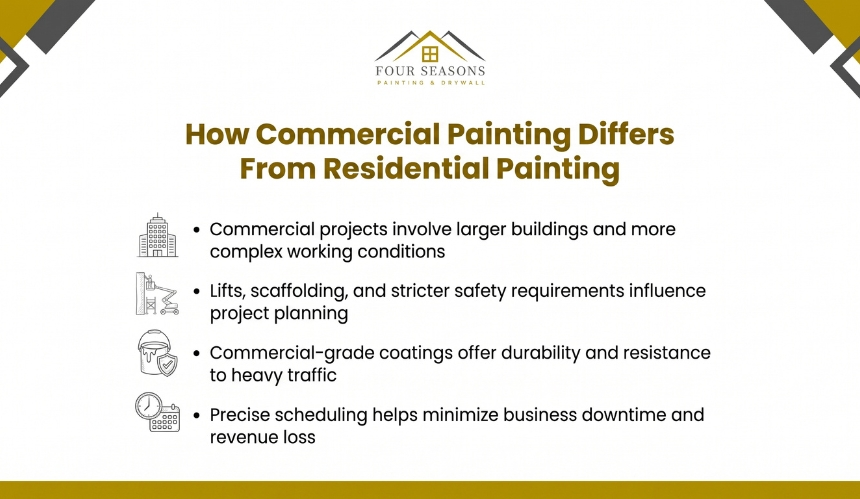
Commercial painting projects involve larger square footage, taller structures, stricter safety and code requirements, and the added complexity of working around employees, customers, or tenants. Contractors often need lifts or scaffolding, must follow OSHA safety protocols, and sometimes need to coordinate with property management or city permitting offices, especially for exterior work on multi-story buildings. The materials used also differ; commercial-grade coatings are formulated for higher durability, chemical resistance, and heavier foot or vehicle traffic than typical residential paints.
Because downtime can directly affect revenue, commercial jobs also demand more precise scheduling. A business that’s closed for even a few unplanned extra days during a paint job can lose real money, so timelines and logistics matter just as much as the paint itself.
Planning Your Commercial Painting Project
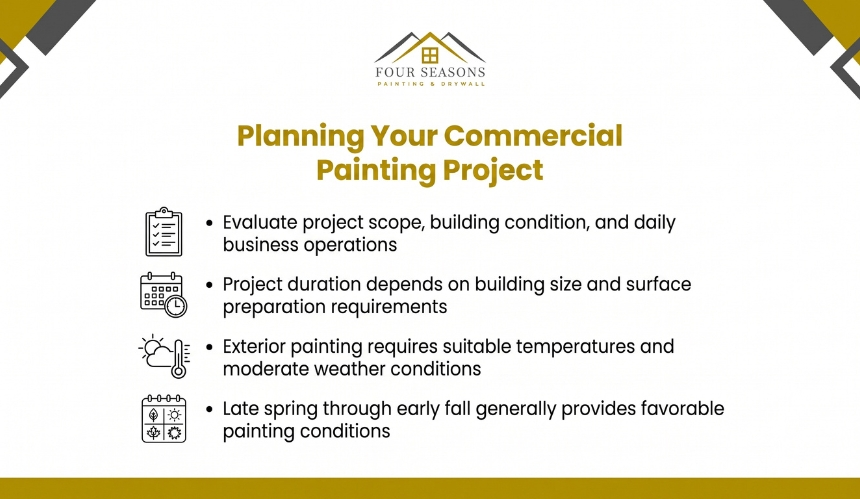
Good planning starts well before the first drop cloth goes down. Property owners should think through the scope of work, the building’s current condition, and how the project will affect daily operations.
How Long Does Commercial Painting Take?
Project length depends heavily on building size, surface condition, and whether the work is interior, exterior, or both. A small retail storefront might take two to three days, while a multi-story office building or large warehouse could take several weeks. Exterior projects typically take longer because they depend on dry, moderate weather windows and often require more extensive surface preparation, including pressure washing, scraping, and priming bare or damaged areas.
Choosing the Right Time of Year to Paint
Timing matters more than many building owners realize, especially in Southeast Michigan. Exterior paint needs consistent temperatures, typically above 50 degrees, and low humidity to cure properly. In the Metro Detroit area, that generally means late spring through early fall is the ideal painting window, since freeze-thaw cycles common in late winter and early spring, particularly in areas like Pontiac and Troy, can leave masonry and siding too damp or unstable for paint to bond correctly. Scheduling exterior work too early in the season often leads to peeling or bubbling once temperatures swing back down.
Choosing the Right Paint and Materials for a Commercial Building
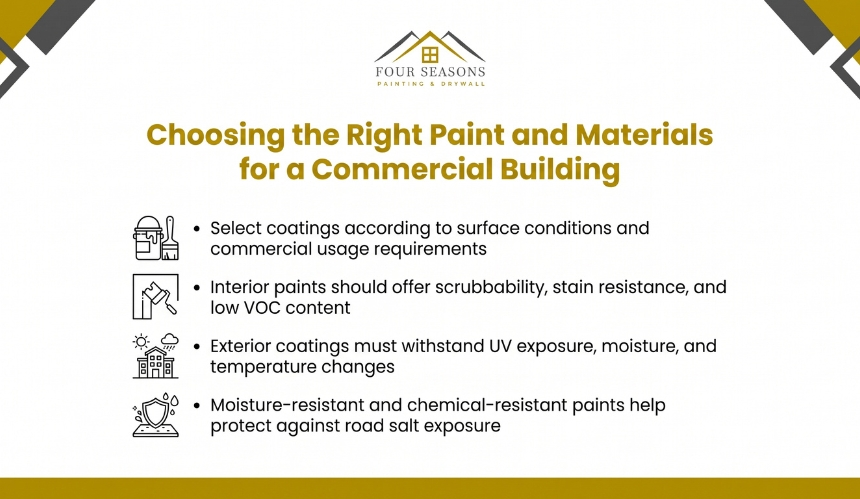
Not all paint is created equal, and commercial buildings need products rated for the specific demands they’ll face. High-traffic hallways, loading docks, and exterior walls exposed to weather all require different formulations than a standard residential wall.
Interior vs. Exterior Commercial Paint: What's the Difference?
Interior commercial paints are typically chosen for scrubbability, stain resistance, and low VOC content, which matters for occupied spaces like offices, schools, or medical facilities. Exterior commercial coatings need to withstand UV exposure, moisture, and temperature swings. In Metro Detroit, exterior paint also has to hold up against road salt spray during winter months, which is a real concern for buildings along busy corridors like Woodward Avenue or Gratiot Avenue, where plow trucks and salt brine treatments are common from November through March. Choosing a paint rated for moisture and chemical resistance in these areas can significantly extend the life of the finish.
Preparing a Commercial Building for Painting
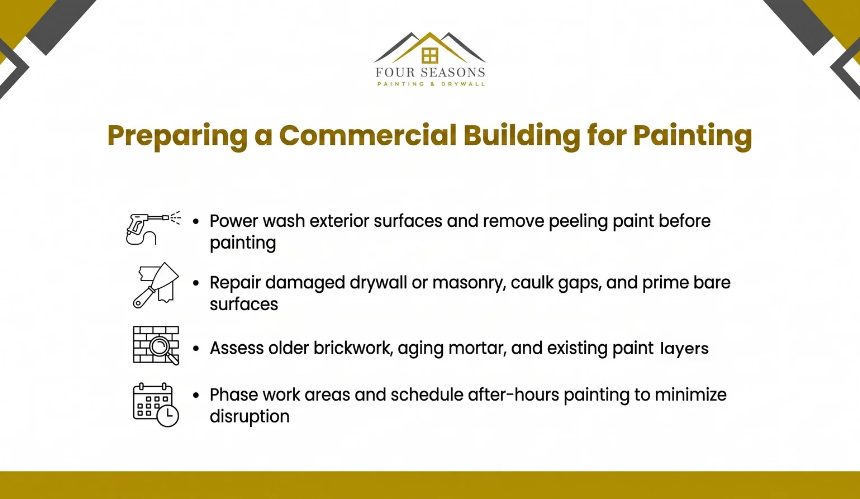
Surface preparation accounts for a large share of a paint job’s long-term success, often more than the paint itself. This includes power washing exteriors, scraping and sanding peeling areas, repairing drywall or masonry damage, caulking gaps, and priming bare substrate. Skipping or rushing prep work is one of the most common reasons commercial paint jobs fail early.
Older buildings, especially brick structures in historic commercial corridors like Corktown or Eastern Market, often need extra attention. Aging mortar, efflorescence, and decades of previous paint layers require careful assessment before new coatings go on, or the paint simply won’t adhere properly.
Minimizing Disruption to Your Business
For occupied commercial spaces, scheduling is just as important as surface prep. Many businesses in walkable downtown areas such as Royal Oak or Birmingham request after-hours or weekend painting to avoid disrupting customer foot traffic during the day. A good contractor will work with you to phase the project, section off work areas, and use low-odor products when spaces need to remain open during painting.
Hiring the Right Commercial Painting Contractor
Choosing an experienced commercial painting contractor is one of the most important decisions in the entire process. Look for a company with commercial-specific experience, proper licensing and insurance, and a track record of completing projects on schedule without compromising quality.
Questions to Ask Before You Hire a Commercial Painter
Ask about their experience with buildings similar to yours in size and use, what surface preparation process they follow, what paint brands and warranties they offer, and how they plan to handle scheduling around your business hours. It’s also worth asking for references from past commercial clients and confirming they carry adequate liability insurance and workers’ compensation coverage, since commercial projects often involve ladders, lifts, and elevated work.
Four Seasons Painting & Drywall LLC provides a full range of interior and exterior painting and drywall services for commercial properties throughout the Metro Detroit area, helping business owners protect their buildings and maintain a professional appearance year-round.
Frequently Asked Questions
How often should a commercial building be repainted?
Most commercial exteriors need repainting every 5 to 10 years, depending on the material, sun exposure, and local weather conditions. Interiors in high-traffic areas, like lobbies or hallways, often need touch-ups or a full repaint every 3 to 5 years.
Does weather affect commercial exterior painting?
Yes. Paint needs stable, moderate temperatures and low humidity to cure properly. Painting during cold, damp, or rapidly changing weather conditions can lead to poor adhesion and premature peeling.
Can commercial painting be done while a business stays open?
In many cases, yes. Contractors can phase the work, section off active areas, and schedule painting during off-hours or weekends to minimize disruption to customers and employees.
What type of paint is best for commercial buildings?
It depends on the surface and use. High-traffic interiors typically need scrubbable, washable finishes, while exteriors need UV-resistant, moisture-resistant coatings formulated to withstand weather exposure and temperature swings.
How much surface preparation does a commercial paint job need?
Preparation varies by building condition but usually includes cleaning, scraping loose or peeling paint, repairing damaged drywall or masonry, caulking gaps, and priming bare surfaces before any topcoat is applied.
Is it cheaper to paint a commercial building in-house or hire a professional?
While in-house painting may seem cheaper upfront, professional commercial painters bring proper equipment, safety training, and commercial-grade materials that typically result in a longer-lasting, more even finish, which reduces the need for frequent touch-ups or early repainting.